English
Intent
At our school, we aim to ensure that all pupils become confident, fluent readers and effective writers who can communicate their ideas clearly and thoughtfully. Our English curriculum is ambitious, carefully sequenced and inclusive, enabling pupils to develop a secure foundation in phonics, a love of reading, and the knowledge, skills and stamina required to write for a range of purposes and audiences.
Reading is at the heart of our curriculum. We intend for pupils to read widely and often, gaining both pleasure and information, and to develop a secure understanding of vocabulary, language structures and authorial choices. Through high-quality texts, pupils are exposed to a broad range of authors, genres, cultures and perspectives, allowing them to understand both their own experiences and those of others.
Writing is underpinned by reading and talk. We intend for pupils to write clearly, accurately and coherently, adapting their language and structure for different purposes. Our curriculum enables pupils to plan, draft, evaluate and edit, building control over sentence structure, grammar and transcription, while developing an increasingly confident writer’s voice.
Phonics is taught through the Essential Letters and Sounds (ELS) programme for those pupils who need it, ensuring consistency and progression from our main feeder infant school. This enables pupils to secure word‑reading skills early, ensuring that they can access the wider curriculum as fluent readers.
Implementation
Early reading and phonics
Phonics is taught using Essential Letters and Sounds (ELS), following a structured, systematic and rigorous approach with regular assessments so any gaps in phonic knowledge are identified and filled through small group interventions and 1:1 focus sessions. Teaching builds directly from the provision in our feeder infant school, ensuring continuity, consistency and high expectations.
Pupils read fully decodable texts closely matched to their taught phonics, with regular opportunities for re-reading to develop fluency, accuracy and confidence. Pupils who need additional support receive timely intervention, ensuring they keep up rather than catch up.
Reading
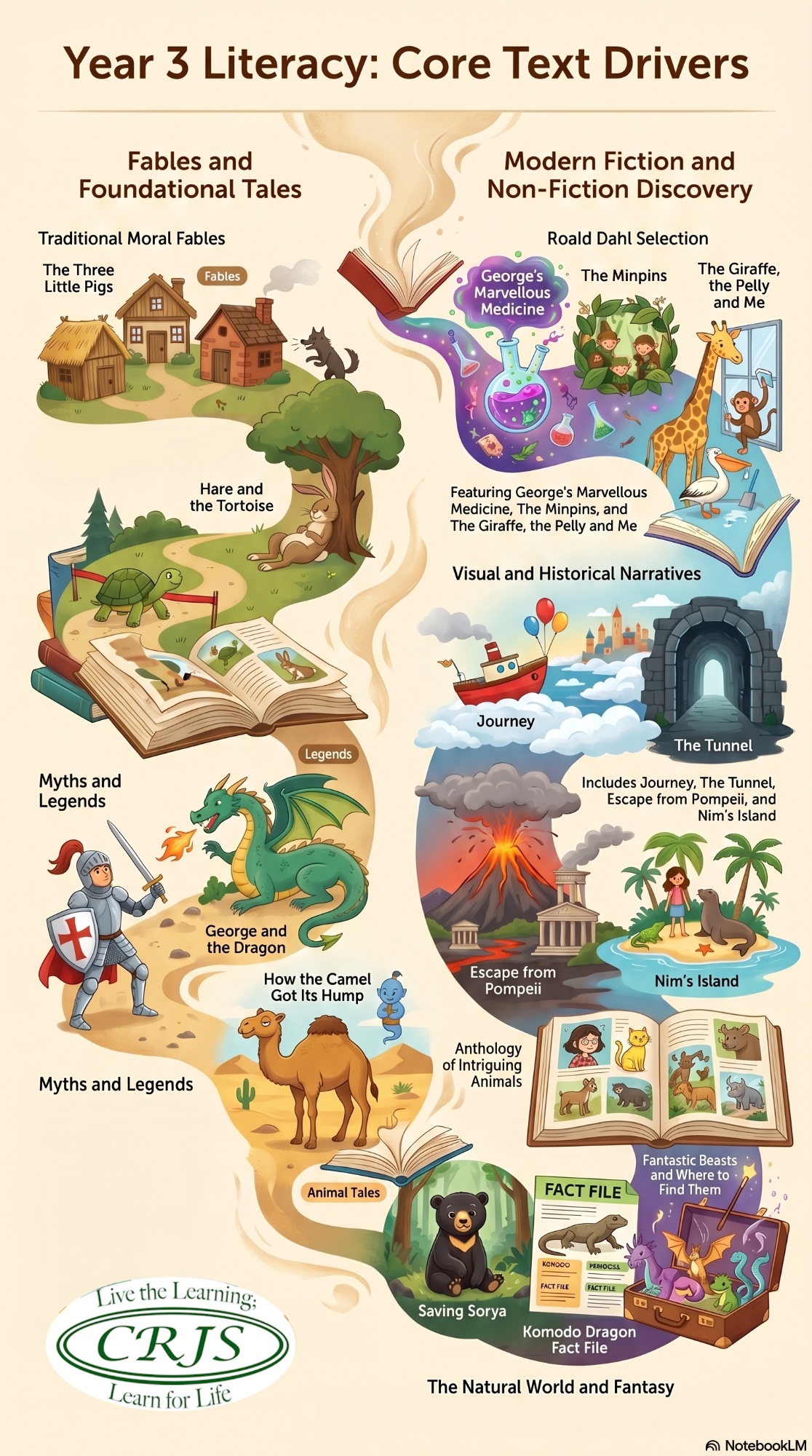
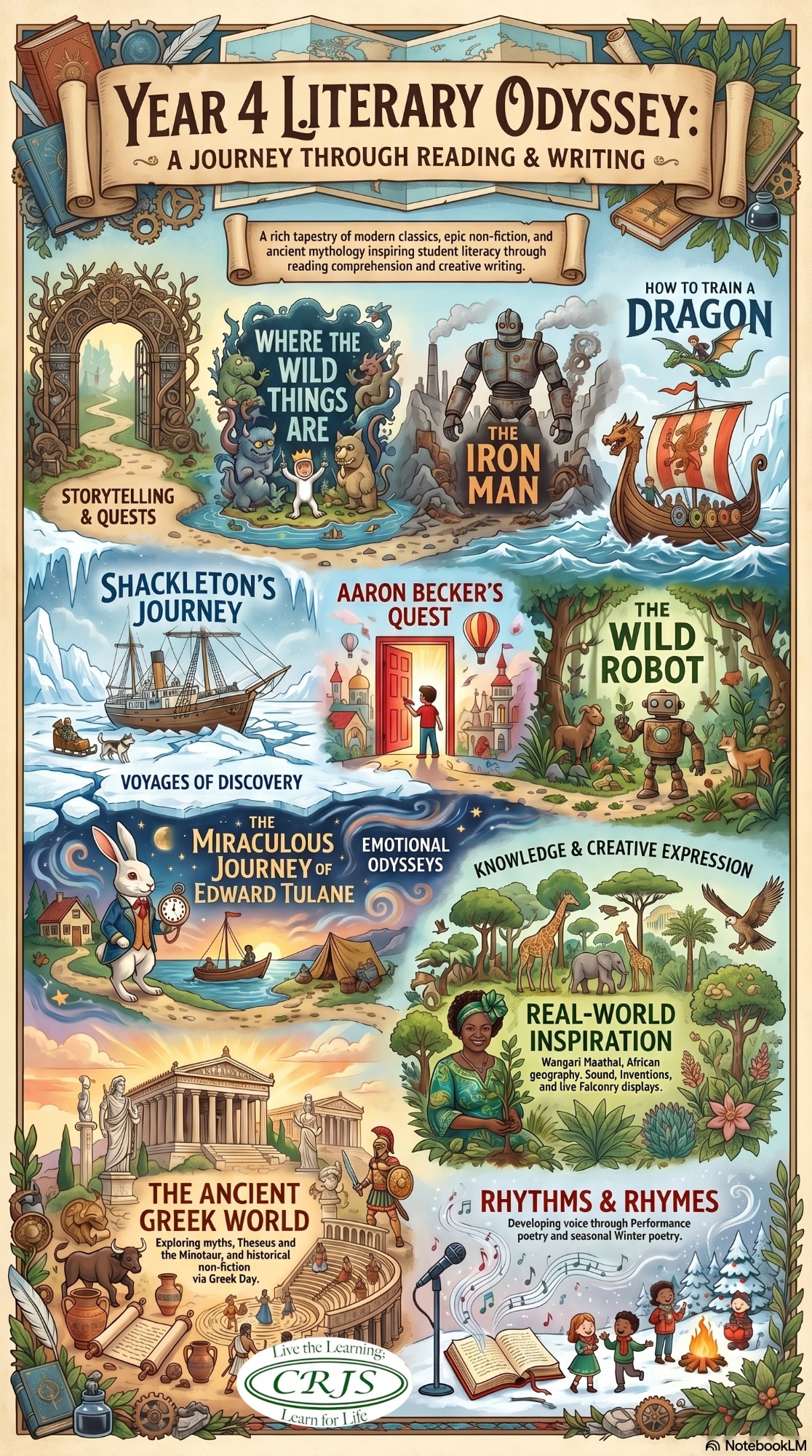
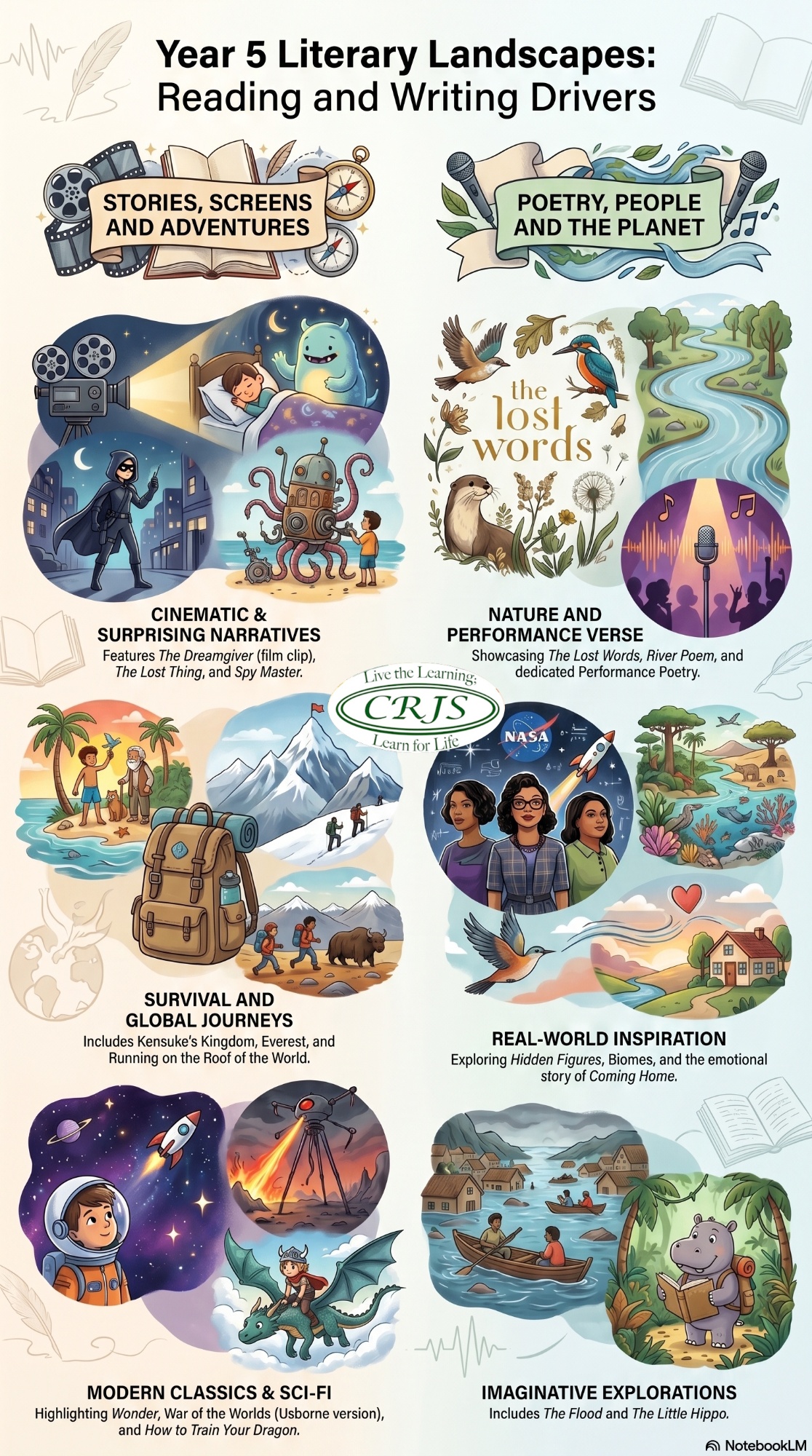
Our whole class reading texts are selected with deliberate intent to support pupils to 'think like readers'. Text choices are driven by:
- Clear links to the concurrent curriculum context to build background knowledge
- Pupils’ interests and motivations to promote engagement and reading for pleasure
- A rich range of authors, cultures and lived experiences
- Pupils’ reading proficiency, language development and oracy needs
- A carefully planned balance of fiction, non-fiction and poetry
- Exposure to both high-quality classic and contemporary texts
Whole-class reading sessions are rooted in the Reading Framework and emphasis on explicit strategy instruction. Teaching focuses on showing pupils how proficient readers read, rather than treating comprehension as a set of discrete skills. Pupils are explicitly taught to apply reading strategies to:
- Read fluently, accurately and with appropriate prosody
- Make sense of vocabulary through morphology, etymology and context
- Construct meaning by retrieving evidence, making inferences, forming predictions and summarising key ideas
Comprehension is organised through VIPERS as a planning and thinking tool, ensuring breadth and depth of understanding:
- Vocabulary
- Inference
- Prediction
- Explanation
- Retrieval
- Summarise
- Sequence
Teachers plan purposeful, carefully sequenced questions that model expert reader thinking and gradually release responsibility to pupils. Across the week, pupils apply reading strategies through talk, writing and reflection, strengthening comprehension while building stamina, confidence and enjoyment as readers.
Writing
Writing is taught through a clear progression of skills, informed by the Writing Framework, ensuring pupils:
Understand purpose and audience
Learn how to generate ideas, plan content and structure
Develop control over sentence structure, grammar and punctuation
Edit and improve their work, building accuracy, clarity and cohesion
Teachers model writing explicitly, using shared and guided writing to demonstrate the thinking processes of a writer.
Writing opportunities are purposeful and meaningful, often linked to high-quality texts and the wider curriculum.
Oracy underpins writing, with pupils given regular opportunities to rehearse ideas orally, discuss language choices and explain their thinking.
Spelling:
Our spelling lessons follow the Spelling Shed scheme. Spelling Shed is a whole‑school spelling scheme aligned to the English National Curriculum, providing structured coverage of spelling rules, patterns and statutory word lists across Key Stage 1 and Key Stage 2. At Crawley Ridge Junior school, pupils’ spelling is developed through a combination of phonological, orthographic, morphological and etymological understanding.
Handwriting:
Handwriting is a fundamental skill. When pupils are fluent cursive writers, this reduces the cognitive load so they can focus on the content, structures and vocabulary choices when writing. At Crawley Ridge Junior School, we promote the use of cursive handwriting from Year 3 to Year 6 following the Oak Academy because fully joined cursive handwriting encourages:
· Natural movement
· Correct letter formation
· Less load on memory, aiding movement from left to right
· Clearer spacing
· Increased speed
· The development of a personal style
· Less focus on the mechanics and more on the product of writing
· Improved spelling
Impact
As a result of our approach:
Pupils become confident, fluent readers who can access age‑appropriate texts with understanding and enjoyment.
Pupils demonstrate strong comprehension skills, applying VIPERS strategies independently and supporting their answers with evidence from the text.
Pupils develop a secure and adaptable writing skillset, enabling them to write for different purposes with increasing accuracy, detail and confidence.
Pupils show a growing vocabulary and control of language, influenced by the diverse texts they have encountered.
Pupils are able to articulate their ideas clearly, using discussion to deepen understanding and improve their written outcomes.
Disadvantaged pupils and those with additional needs are supported effectively, ensuring equity of access and high expectations for all.
Pupils leave our school as articulate, thoughtful and reflective learners, well prepared for the next stage of their education.
Homework
Reading, writing and the spoken language form a vital part of our whole curriculum, therefore, reading is the main focus on our English homework tasks. All children have a reading record to keep a log of the books they have been reading both in school and at home. This document allows teachers to monitor the range of books each child is reading. The teacher then has the opportunity to recommend books using their own subject knowledge. In years 3 and 4 all children must read aloud to an adult at home four times a week. This reading aloud also includes discussing the text. In year 5 and 6, the children are asked to share a book with an adult at home four times a week. This may be by reading aloud or discussing the text using reading prompts provided.
Teachers may also set homework linked to the class learning for spelling, grammar, vocabulary or punctuation.
Links between English and other subjects
Reading, writing and the spoken language are integral to the school curriculum. Opportunities for all take place in every subject, from stem sentences in maths to debates in history and evaluations in art. Our chosen hooks and text-drivers often link to the year group’s geography, history or science topic. This topic then links to art and DT forming links throughout the week.
Pupils with special educational needs and individual learning plans
Teachers will aim to include all pupils fully in their daily English lessons. All children benefit from the emphasis on oral work and participating in watching and listening to other children demonstrating and explaining their learning. However, a pupil whose difficulties are severe or complex may need to be supported with an individualised programme in the main part of the lesson. The class teacher will follow the individual learning plan for each child personalising the learning to meet their specific needs.
Class book corners are monitored by the class teachers. New books are added regularly and less popular books removed to keep the area fresh and allow children to easily access a book of their choice. All classrooms have a set of dictionaries and thesauruses. The school library is available for the children to visit at lunch times or they may visit with their class teacher during a lesson. Working walls keep a record of the learning creating a resource for all children to access in the classroom.
Working Walls
Every classroom will have an English working wall. This working wall changes throughout the learning journey. Key new learning will be added to the wall during the unit of learning. Children are encouraged to use the information on the wall as well as collect useful resources, such as word mats, which may be displayed there. When writing independently, the children are able to use all the resources available in the classroom.
Non-negotiables
Our English non-negotiables are highlighted in bold on our TAMAT assessment grids. Teachers use our assessment grids to carry out their teacher assessment judgements as well as inform their planning.
Library
Our well-stocked library supports all aspects of the curriculum and children enjoy visiting with their teachers. We have a part-time librarian who enables children to use the library at lunchtimes.