Computing
Intent
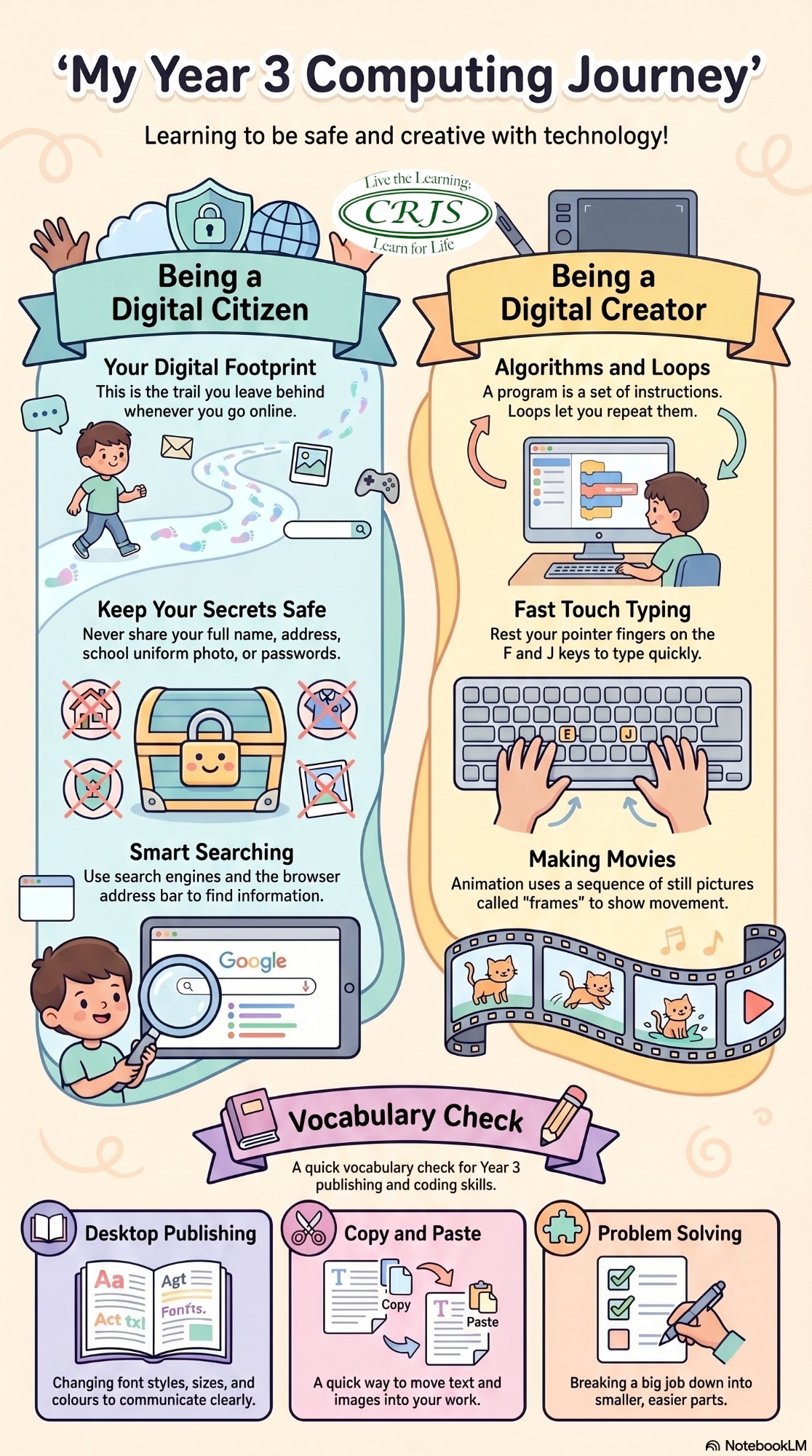
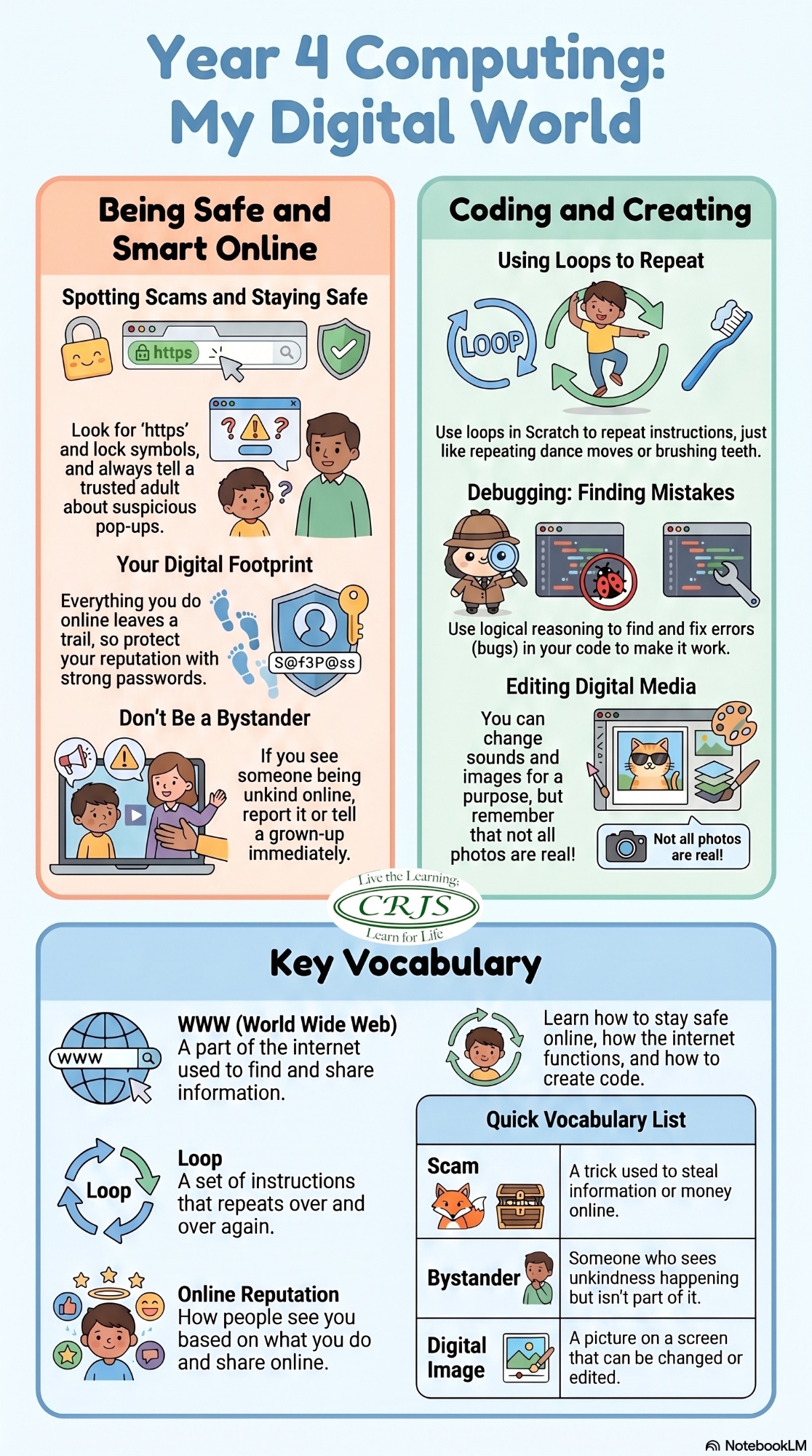
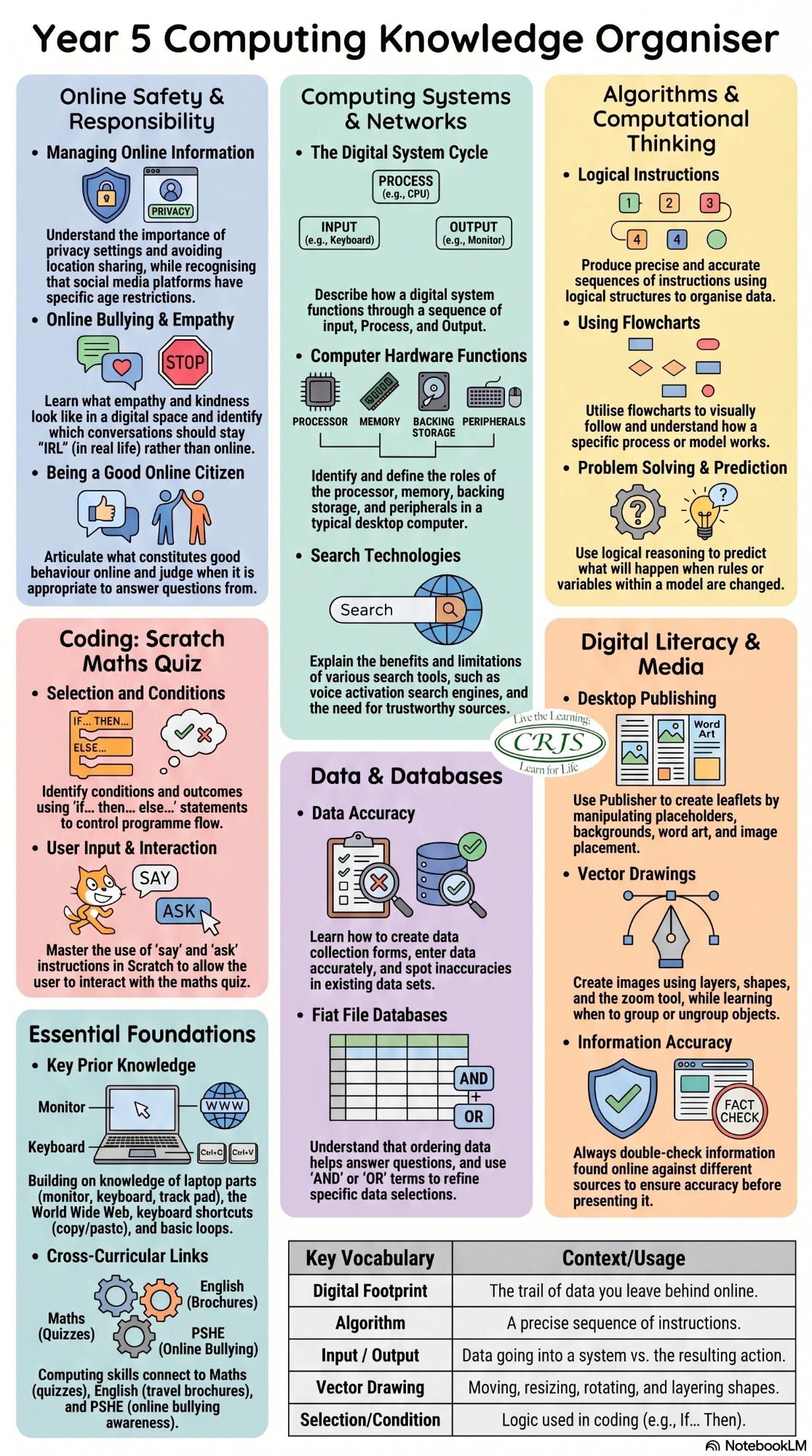
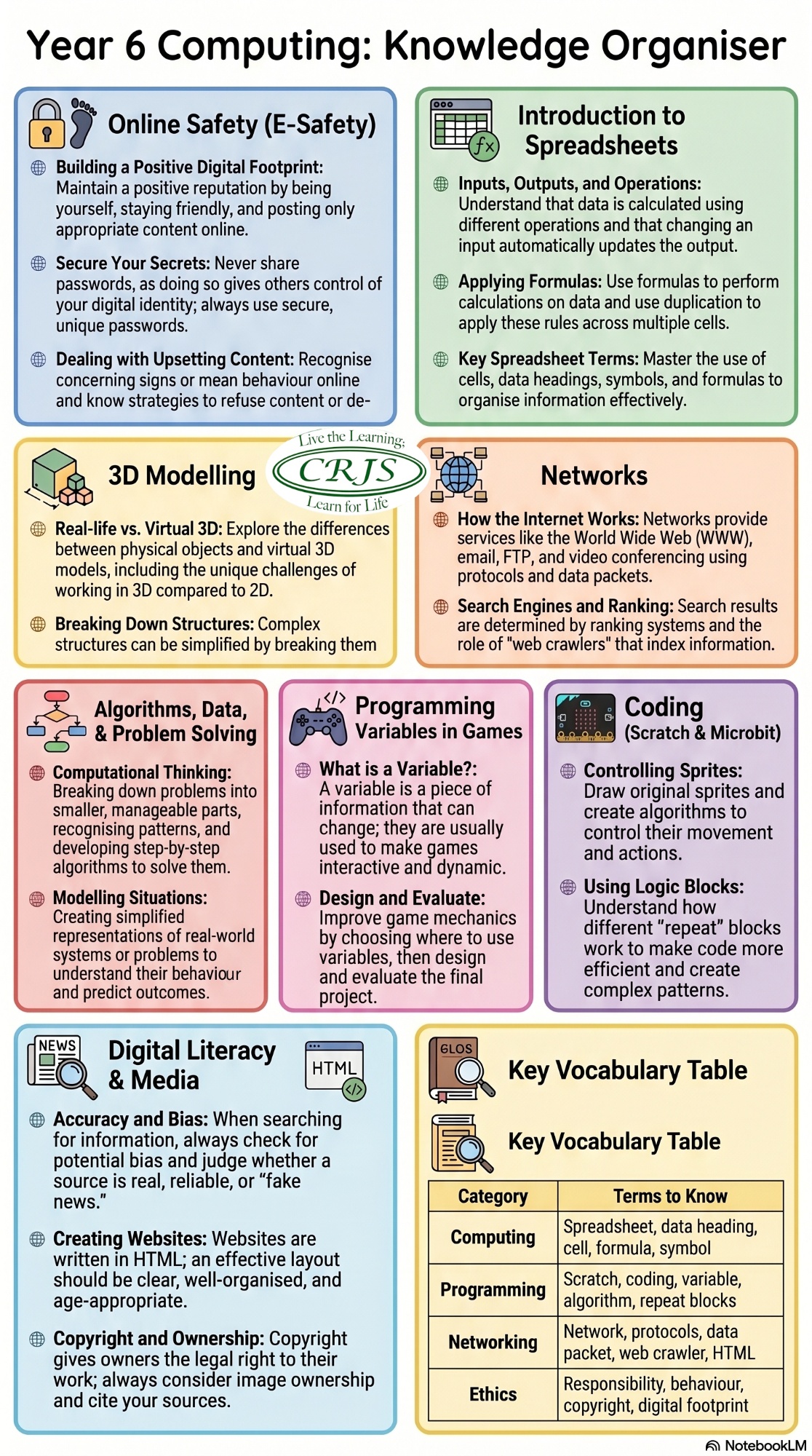
At our school, we aim to equip all pupils with the purposeful computing skills they need to thrive in an increasingly digital world. From Year 3 onwards, pupils develop a strong foundation in computing which is systematically built upon as they progress through the school, ensuring they leave Year 6 confident and competent users of technology.
We aim to inspire curiosity, creativity and enjoyment in computing by providing pupils with a wide range of opportunities to explore different areas of the computing curriculum, including digital creation, problem solving and computer science.
Online safety is a fundamental priority. We aim for all pupils to understand the potential risks associated with being online and to behave safely, responsibly and respectfully. Through a rigorous and consistent approach, we ensure that pupils leave our school with the knowledge, skills and confidence to stay safe in the digital world.
Implementation
Computing is taught in all year groups using the ‘Teach Computing’ curriculum, developed by the National Centre for Computing Education. This provides a coherent, progressive curriculum that covers the three strands of the subject: computer science, information technology and digital literacy.
Pupils engage in a broad range of computing experiences, including programming, video and sound editing, data handling, computer networks, image editing and 3D modelling. Units are typically taught over a six‑week period, although teachers have flexibility to deliver content as focused blocks where this best meets the needs of pupils.
Online safety is explicitly taught through the Google Online Safety Curriculum, which introduces pupils to real‑life scenarios and developing risks. Safeguarding is prioritised across the school and online safety messages are regularly reinforced throughout the year through assemblies, PSHE lessons and cross‑curricular links, ensuring pupils consistently revisit and deepen their understanding.
Teachers use assessment opportunities within lessons to identify misconceptions and adapt teaching to support progress. Computing skills are revisited and applied across the curriculum, allowing pupils to practise and embed their learning in meaningful contexts.
Impact
By the time pupils leave our school, they are well‑prepared for the next stage of their education and life in a digital society.
Computer Science:
Pupils understand key principles of information and computation, how digital systems work and how to apply this knowledge through coding, programming and problem‑solving activities.
Digital Literacy:
Pupils can express their ideas creatively using digital tools, evaluate and improve their work, and confidently navigate a range of technologies. They demonstrate a strong understanding of how to stay safe online and make informed, responsible choices.
Information and Communication Technology:
Pupils use a variety of software and devices effectively, selecting appropriate tools to create, present, analyse and evaluate digital content. They work both independently and collaboratively, applying their skills with confidence.
As a result, pupils leave our school as capable, responsible and confident digital learners who are ready to meet the demands of an ever‑changing technological world.