
Crawley Play
 Find out all about our exciting playtimes
Crawley Play is our school‑led outdoor play and learning approach, designed to ensure that every child has high‑quality, enriching play experiences throughout the school day. The scheme is led by Miss Chick and Miss Gomm, who work closely with staff and pupils to continually develop exciting, inclusive and purposeful play opportunities across our school grounds.
Crawley Play is based on the understanding that children learn not only through excellent teaching, but also through play. As around 20% of a child’s time in school is spent at playtime – the equivalent of over a year of their primary education – we believe this time should be as valuable, engaging and supportive of development as possible.
Childhood has changed significantly in recent years. Many children have fewer opportunities to play freely outdoors outside of school. For example:
- Average screen time per day: around 5 hours
- Average outdoor play time per week: around 5 hours
- Percentage of UK children who only regularly play outdoors with other children at school: 56%
Crawley Play aims to respond to these changes by giving children the time, space and freedom they need to play, explore, cooperate, take risks and develop resilience in a safe and supported environment.
The benefits of high‑quality play are well‑documented and we see this reflected in school through:
- Increased enjoyment of school
- Improved behaviour and social skills
- Fewer playtime disputes
- Reduced accidents
- Greater confidence, creativity and independence
Play is not “just messing about”. It is a vital process through which children learn important life skills that cannot be taught directly, all while experiencing joy, excitement and a sense of belonging.
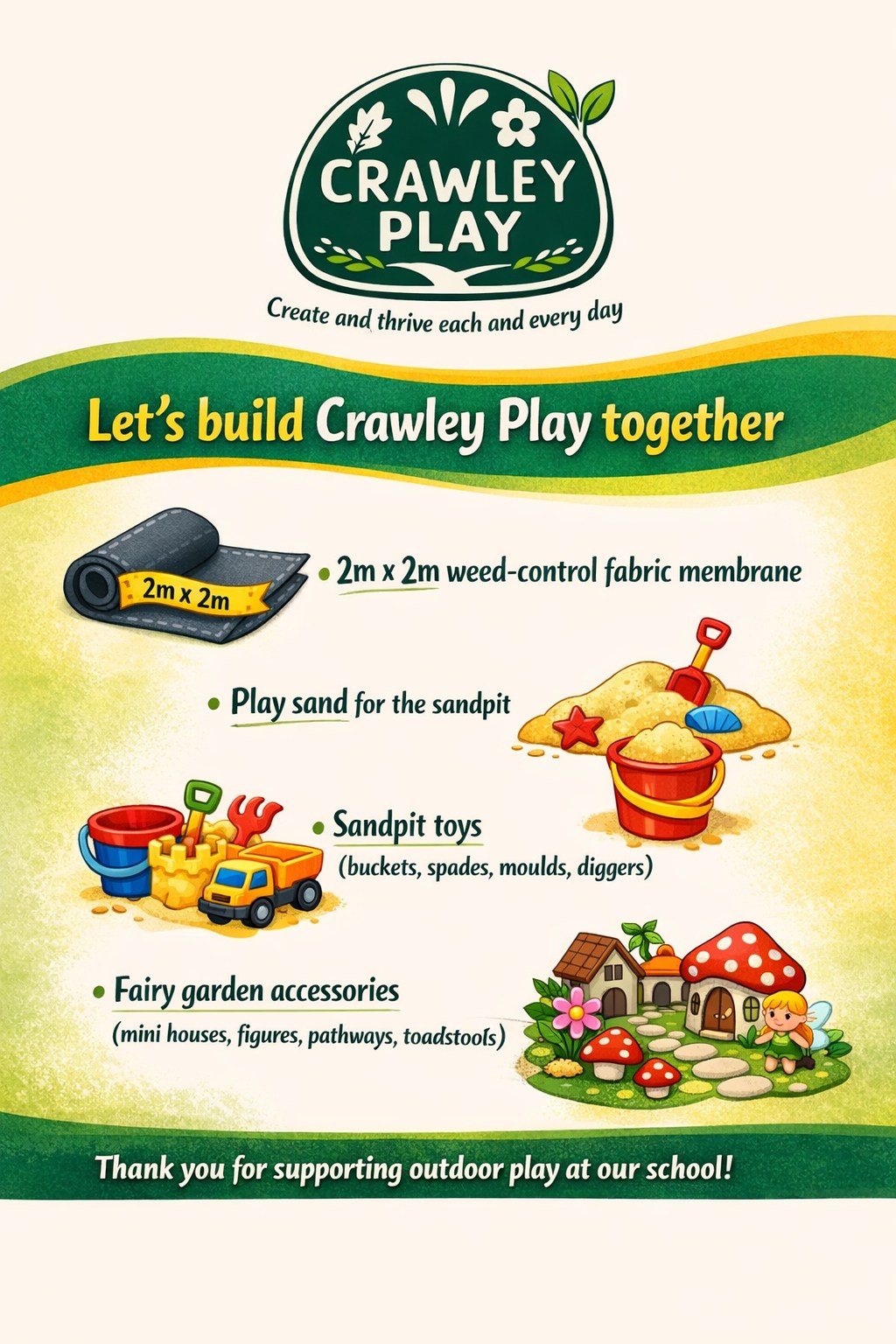
As Crawley Play continues to develop, you may notice changes to how the school grounds are used and may occasionally be asked to support us with resources. Children may use more areas of the school, throughout more of the year. They may get a little muddier, face new challenges and enjoy greater freedom in how, where and with whom they play.
These experiences are essential for children’s physical health, mental well‑being and emotional development, and are fully in line with current best practice guidance on safety, well‑being and child development.