Geography
Intent:
Crawley Ridge Junior School is committed to providing a high-quality educational experience for all pupils. Our intent is to:
• Increase and develop children’s geographical skills, knowledge and attitudes.
• Inspire in pupils a curiosity and fascination about the world and its people.
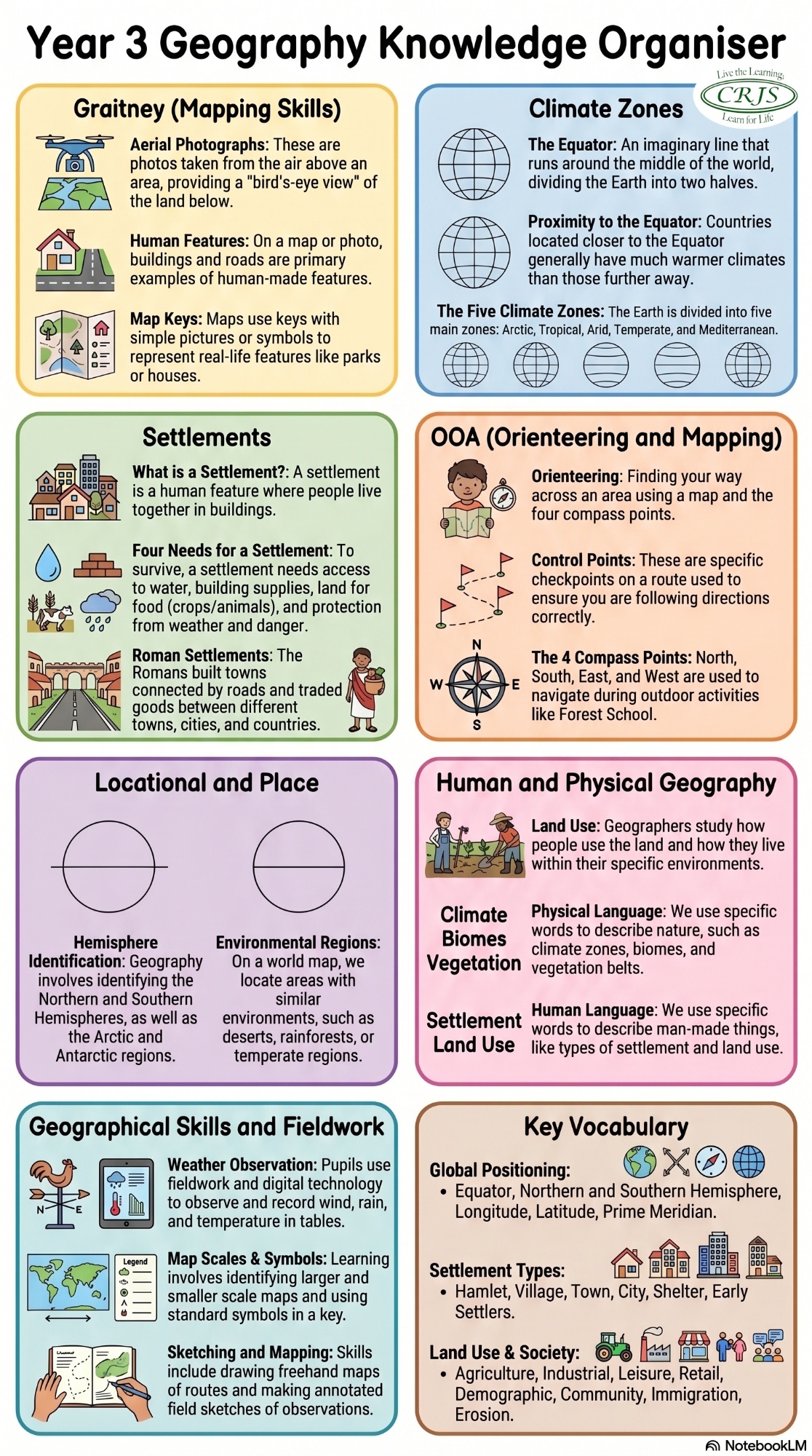
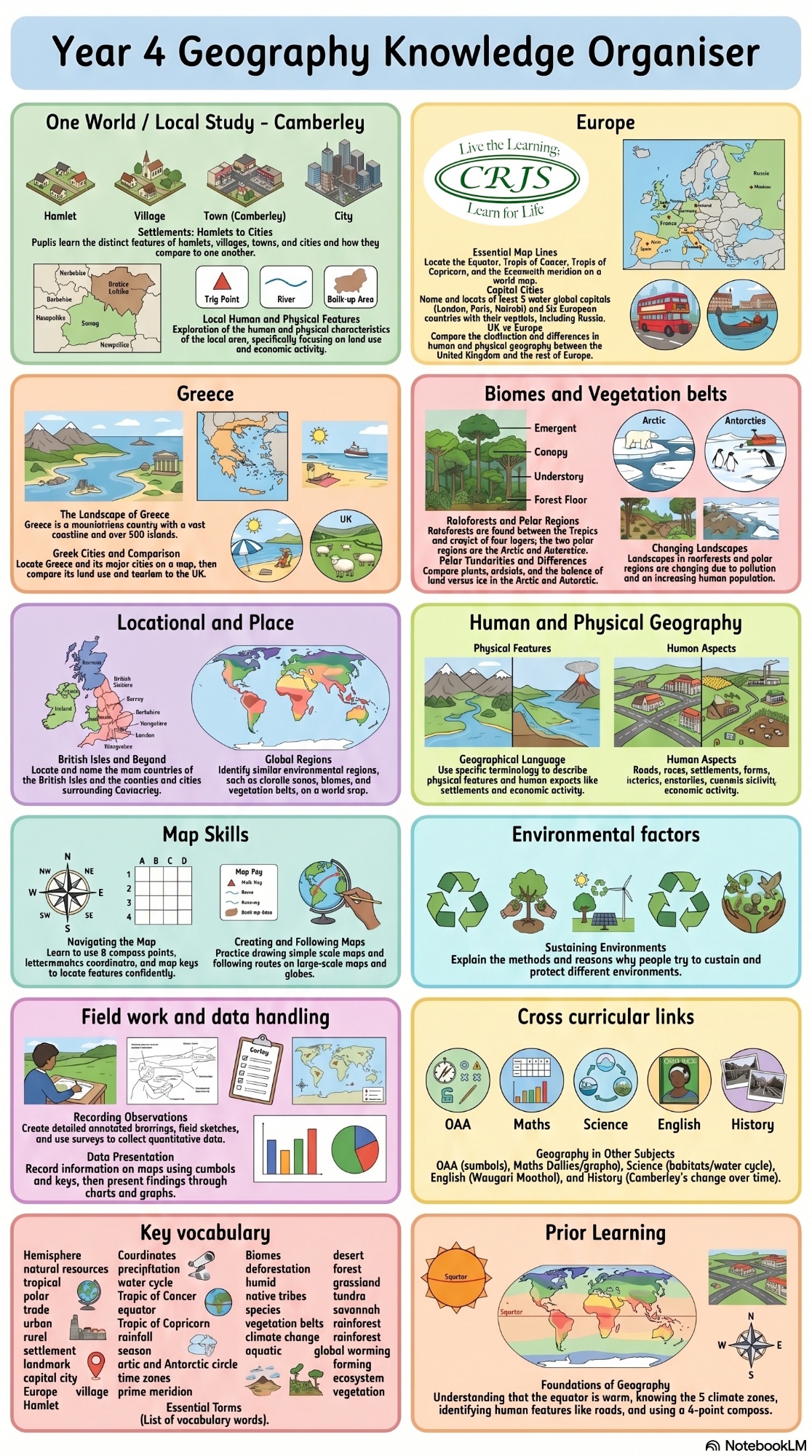
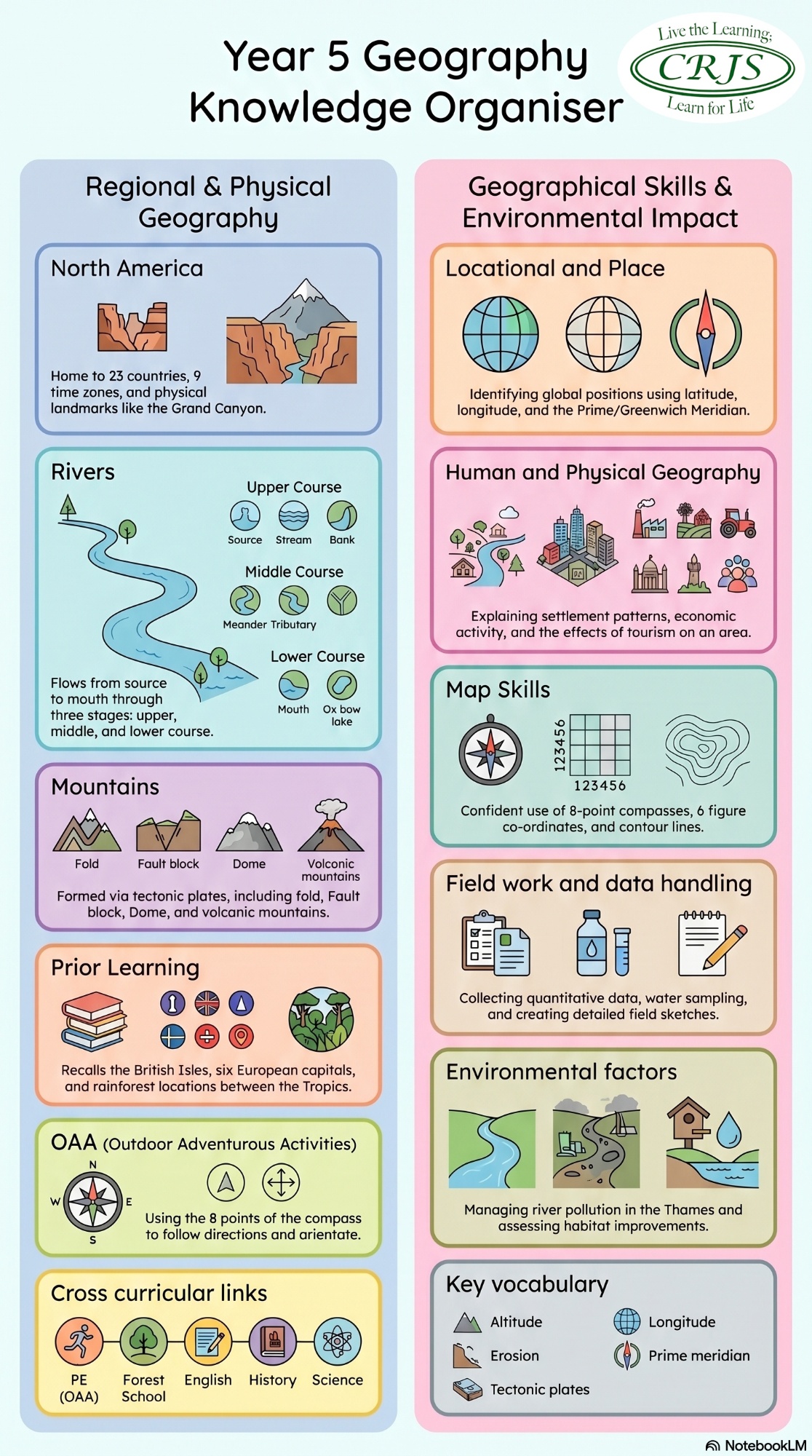
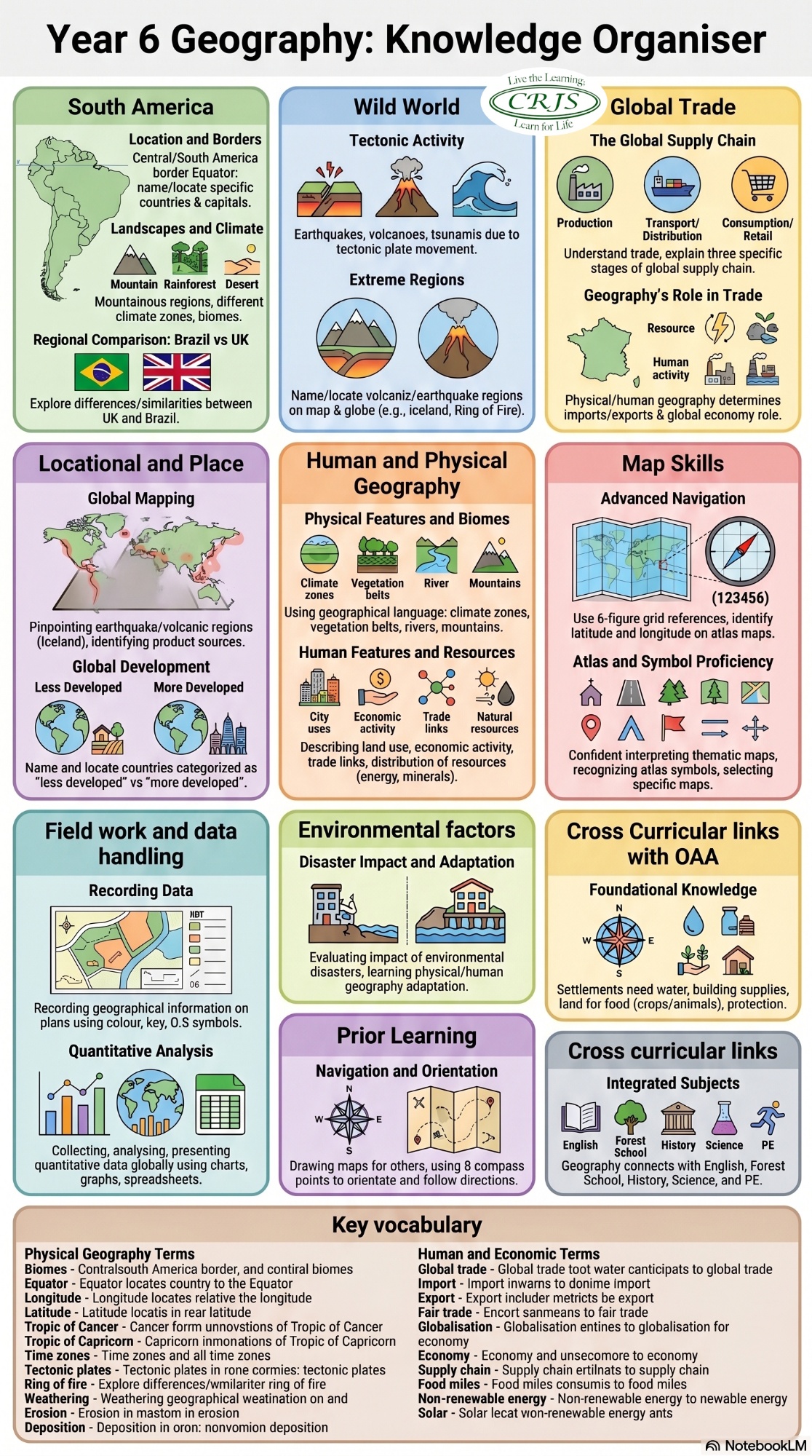
•Develop skills, knowledge and curiosity about the world and its people through the themes and practices of: locational and place knowledge, human and physical geography, map skills, environmental factors, field work and data handling.
Implementation:
The Key Stage 2 geography National Curriculum is planned for and covered in full, within our Geography Knowledge and Skills progression.
Whilst the National Curriculum forms the foundation of our curriculum, we aim to enhance this through visits, visitors and theme days in order to provide first-hand experiences for children to support and develop their learning.
Skills progression is developed through the key elements of: locational and place knowledge, human and physical geography, map skills, environmental factors, field work and data handling.
Geography is taught in topic-led units of study, through cross-curricular links with other subject-led units of study, as well as through trips, assemblies, visitor events and theme days.
Impact:
• Children will know more, remember more and understand more about geography.
• Children will develop as geographers by developing their skills, knowledge and understanding of: locational and place knowledge, human and physical geography, map skills, environmental factors, field work and data handling.
• The vast majority of children will achieve age-related expectations in geography.
• As geographers, children will develop a curiosity and fascination about the world and its people that will spark their interest for life.
Learning in Geography is assessed through a range of summative approaches. Teachers assess pupils’ understanding during lessons through questioning, discussion and observation of tasks. Outcomes in books, including written work, maps, fieldwork and data-handling activities, demonstrate pupils’ developing knowledge and skills over time. Pupil voice is used to assess confidence, understanding and use of subject-specific vocabulary. Progress is further monitored through end-of-unit enquiry questions and termly teacher judgement, supported by moderation and monitoring, to ensure consistency and accuracy across the school.